David Mullarkey – Q&A
A conversation with one of the Isle of Man’s leading distance runners, record-holder, and rising international competitor.
Background & Beginnings
How did you first get into running — was there a specific moment or influence that inspired you to start?
I first started running during lunchtime in primary school (Rushen Primary) until my teacher had to tell me to do less. This was the case until a school friend convinced me to go to the Manx Harriers track meets, where I fell in love with the sport, not just distance running.
What do you remember most about your early running experiences growing up?
It would involve turning up on a Wednesday night and participating in three or four events, including sprints, throws, and distance. This was also a great opportunity to meet many people and make some good friends along the way.
You competed from a young age locally and internationally (including the Commonwealth Youth Games and Island Games) — what lessons did those early races teach you?
The great thing about this sport is that there are always more opportunities and races to learn from and grow as an athlete. These early races were key in my development, as they exposed you to racing at different levels and situations. It may not seem like it at the time, but both the successes and failures from these races can be key moving forward. I learnt a lot about how to physically, mentally, and emotionally prepare for some of the biggest stages.
Which coaches, teammates, or family members have supported you most during your early development?
There have been so many that the list is almost too long. Di Shimell, Graham Davies, and Andy Fox were all a part of my journey and all played a key role at different stages of my development, each being instrumental in becoming the athlete I am today. Rachael and Alan Corlett were also great training partners and friends growing up, and it was an honour to be at their wedding over the summer. I also couldn’t thank my parents enough, who sacrificed so much by working over the weekends and spending nights at the track, and my auntie, who would drive me to the BMC meets in Manchester. Sport Aid was also influential in providing me with the opportunity to compete in the UK regularly.
University & Development
How was your experience at Leeds Beckett University — specifically with the training?
Moving to Leeds was an amazing opportunity to be more consistent with the training, but also to learn from Andrew Henderson and high-level athletes such as Phil Sesseman. I developed a lot under the guidance of Andy and went from a 15:21 5k to 13:43 in the four years that I was there.
How did the opportunity to run and study in the United States come about, and what made you decide to take that step?
Around the time of the Commonwealth Games in 2022, I applied to pursue a master’s degree in Leeds and was waitlisted. However, a recruiting agency had reached out to me, and I decided to explore the idea of studying in the US. I saw this as a great opportunity to continue pursuing an education, but also to invest a lot of time in running.
You ran for both Florida State University and Northern Arizona University — how did those experiences differ, and what did they each teach you about racing and training?
Florida State provided valuable exposure to the NCAA and racing as part of a team, rather than just as an individual. It was a place where I learnt a lot about training philosophies and the science behind zones and paces. However, at NAU, I learnt much more about the mental aspect and how to prepare before and during races. I am such a different athlete than I was 18 months ago, just by making small adjustments to be less outcome-oriented and more process-oriented. This means I am now much more aware of what I need to do in order to have a successful race.
What were some of the biggest adjustments you had to make when transitioning from UK races to NCAA competition?
The biggest difference is the volume of races you do in the NCAA in a short amount of time. This means that you are competing on opposite sides of the US almost every two weeks for much of the year. As a result, your training blocks have to carry you through the whole season, and rest becomes even more pivotal.
How did training and racing in the NCAA programme help prepare you for higher-level international competition?
There are very few time-trial races in the US, and the key focus is on championship racing. This means both the training and racing teach you how to compete rather than just running fast. International racing often revolves around this, where you must be ready to handle surges and close fast, which I am much more prepared for now.
Records & International Racing
You’ve set multiple Isle of Man records — from the 1500m to the 10,000m — how special is it to hold those marks?
To have your name etched into the record books is a special feeling, but more than anything, I hope they inspire others to know the levels that people from the Isle of Man can reach. When I finish my career, I want to get these up with some of the world’s best, which in turn will help the Isle of Man produce great athletes in the future (hopefully the records don’t last long!).
At the 2022 Commonwealth Games, you set a new Isle of Man 5000m record — what do you remember from that race?
The Commonwealth Games were on a stage that I had never been close to competing on before. I just remember how loud the stadium was; it felt like it was almost vibrating on the last lap. These are the situations you dream of as a kid and make the lonely miles and huge training blocks worth it. It was definitely a place that I loved being in and made me strive to experience it more regularly.
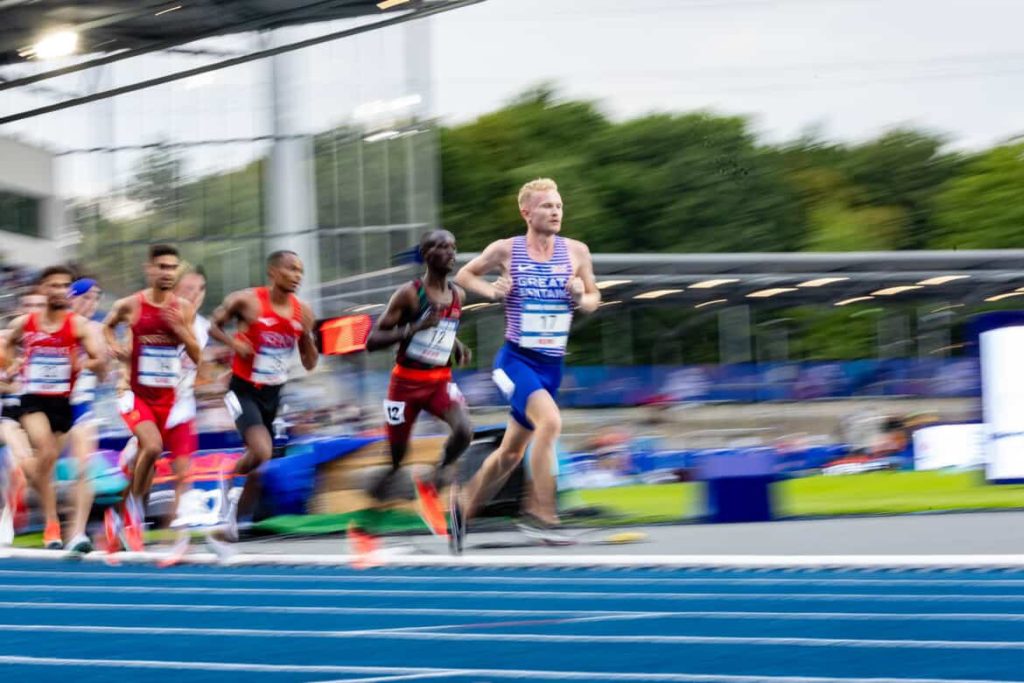
In 2025, you made your senior debut for Great Britain at the European Athletics Team Championships — how did it feel to step onto that stage?
Getting a GB vest was one of my career dreams; having just missed out multiple times as a junior athlete, it felt amazing to finally put on the vest. It felt like I was finally starting to reach the levels that I had been working towards in my career. I learnt a lot about myself and things that I can take forward when I get these opportunities.
You also won two silver medals in the 5000m and 10,000m at the 2025 World University Games — what were the highlights and challenges from that championship?
These races meant a lot in the sense that I was able to apply tactical skills we had been working on all season in a championship setting. Winning medals at championships and placing highly in races is more important to me than running fast times, so it was great to get a couple more highlights on the board. However, running a 10k and two 5ks in the space of four days was challenging both mentally and physically. Trying to prepare for that, there is only so much you can do, and starting races almost cramping is never a good start! But it was a relief and a proud moment to be able to perform at my best across both races and compete against some great athletes in the process.
Training & Approach
How do you currently structure your training — are there specific sessions or philosophies you and your coach focus on most?
I am currently self-coached and have been since July. It has been a learning experience, but also a rewarding one. Based on the coaches I have worked with throughout my development, I apply some of each of their philosophies to how I structure my training. It is very aerobic-focused, with consistency of volume being the key. I use the concept of double threshold, alongside neuromuscular development through hills and short sprints. Most of the year is general base work focusing on each of the zones/channels, with race-specific work only starting three to six weeks before a key race.
What are some of the key differences in your training now compared to when you first started racing at this level?
My training at the start was shorter, higher-intensity speed development, which is important for younger athletes to develop. However, the biggest difference is the length of aerobic reps, as this system is crucial for running world-class times. This also allows for better-quality specific work when the threshold zones are applied correctly.
How do you balance intensity and recovery, especially when preparing for different disciplines?
It has been a lot easier to balance the recovery aspect as I have got older, as I have been fortunate enough to be presented with opportunities that allow me to train with fewer responsibilities outside of training. However, I think the most important thing is to listen to your body, and fatigue past a certain point is telling you to rest. The way I see it, quality workouts come before anything, so your training should be structured around getting the best out of these.
Mental strength is crucial at the elite level — what strategies do you use to stay focused and confident through long training blocks and throughout high-stakes races?
This is a skill that takes a long time to develop and requires exposure to numerous experiences. One thing that has helped me massively is understanding that even when tired during big training blocks, I can still get great workouts in consistently. This means that when I get to a race, it doesn’t really matter how I feel; I can still get the job done. This is what helps me stay calm and balance my emotions.
Lifestyle & Balance
Are you now based in the USA or the UK?
I am currently based in Flagstaff, Arizona, for the time being. This is dependent on contracts and my financial situation, so it could change in the coming months.
How do you balance life, work/studies, and training at an elite level?
Luckily, right now I am able to dedicate all my time to training and racing, which makes it much easier to manage life demands. But when I have been busy with work and school, it is best to find a routine that allows me to get the most out of the training I am able to put in. At the elite level, the most important part of the day is the run or workout you have planned.
What role have training partners and coaching played in your development?
They have all been so crucial, and they know who they are. Each of them has been so important in learning about the sport, training, and even general motivation. I’m a big believer in being around people who make you better, not just physically but also mentally.
Looking Ahead
What are your goals for the 2026 season and beyond — distances, competitions, and championships?
The main goals for the season are focused on both the Commonwealth Games and European Championships, where I will look to qualify in the 10k in each (maybe the 5k too!). Other than that, I am looking to start bridging the gap between my current times and the World Athletics qualifying times. There may be a debut in the half-marathon squeezed into 2026 somewhere too.
Do you have any long-term ambitions in the sport — perhaps targeting specific times or records?
The main ambition I have is to compete at either the World Championships or the Olympic Games. These are the pinnacle of our sport, so to compete at these would be an experience I would never forget, and I don’t want to set limits on what I can achieve. A transition to the marathon will also happen at some point, but I’ve not really given much thought to it just yet.
Advice & Reflection
What advice would you give to young Manx athletes who dream of competing internationally?
I think the most important thing to remember is that everyone is on their own path, and you just need to focus on yourself and your own journey. Everyone develops at different rates and needs different training and support. Don’t worry about what other athletes are doing, and understand what is best for you. Also, don’t be afraid to reach out to people for help and do your research before making big decisions.
What have been the most valuable lessons you’ve learned from your running career so far?
That good things take time, but if you persist and set your mind to something, anything is possible, and running can provide you with some amazing life experiences, regardless of performance.
How do you stay motivated when training gets tough, or progress feels slow?
Anyone who says they are motivated 100% of the time is probably lying, but in a sport where consistency is key, these days are the most important to your development. I think having fun with the sport is key, as this is what keeps it enjoyable so you don’t feel like you are dragging yourself out the door.
2026 World Cross Country Championships Experience
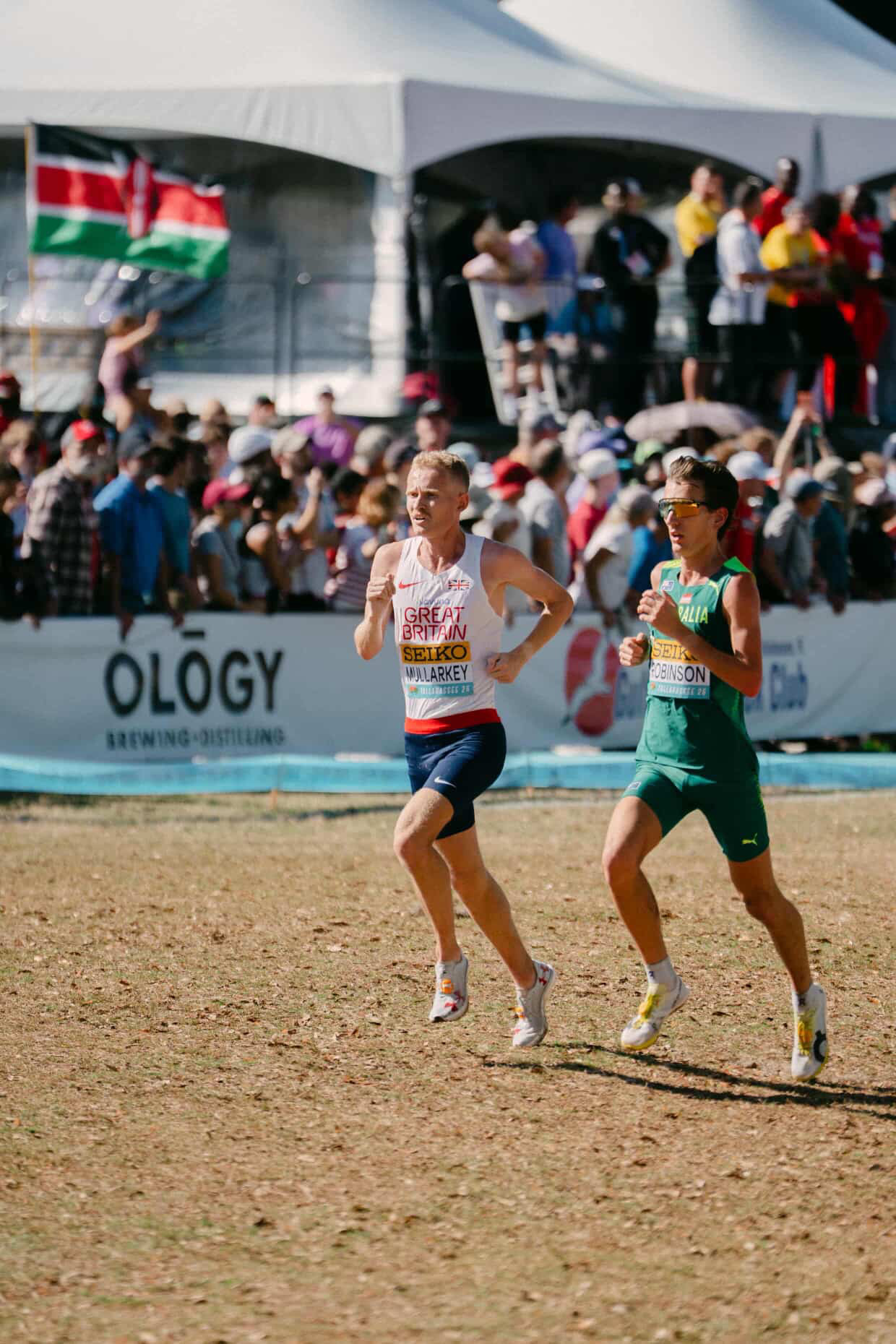
You were selected to represent Great Britain at the 2026 World Athletics Cross Country Championships in Tallahassee — how did you react when you heard you’d been picked again for your second GB call-up?
Probably not the reaction you’d expect, but it was almost relief. I knew I was in great shape and wanted to show that on the world stage, but due to a change in visa status, I couldn’t leave the US to race at the European Championships to secure an automatic spot. Leaving it up to the subjective nature of selection committees is never ideal, but thankfully they selected me, and I knew it was a great opportunity to showcase the quality work I had put in beforehand.
Competing in Florida was almost like racing on “home ground,” given your time there — how did that familiarity with the course and area help you on the day?
I said this in a post-race interview: the course was a completely different dynamic than originally expected. The heat and humidity of Florida are very unforgiving if you are not used to them. Knowing what to expect from the conditions played a huge part in preparation, as it can come back to bite you if not.
The course featured sand, water, and mud — what were the biggest physical and tactical challenges you faced?
I think most people underestimated the difficulty of the obstacles on the course. Having run it the day before, we thought they were just rhythm breakers and not overly difficult, but they felt completely different eight kilometres into the race. The sand giving way under very tired legs was brutal, and most people agreed this was the hardest part. Tactically, it is easy to get carried away early on in races like this, which is why I chose to hang back slightly and work through the field as the race went on.
You finished 26th overall and were the leading British runner — what did that result mean to you?
For me, it was confirmation of what I believed I was capable of based on everything I did in the build-up. However, executing it on race day is another matter, and to achieve what I did was beyond what I would have dreamt of earlier in my career. Being in the US, it was a super-competitive field, and I was racing against athletes who were NCAA champions just years prior, so it was a great feeling knowing I was making inroads toward where I want to be.
How did the atmosphere and spectator support affect your performance?
It’s always a massive encouragement to hear your name being called on the XC course, even more so than on the track, as I feel more aware of what’s going on around me. Like any race, there were tough moments, and a few words of encouragement go a long way.
How does competing at a world championship influence your confidence and goals moving forward?
Knowing I can compete with some of the best in the world is a huge confidence boost. It’s a different dynamic from the track, but the lessons still apply, and it excites me knowing there are more opportunities ahead.
Quick-Fire Questions
Favourite distance to race?
10,000m
Toughest race you’ve ever run?
NCAA XC Championships 2023 (the first k was 2:31 of a 10k race!)
Most memorable stadium or course you’ve competed on?
Birmingham 2022 (Alexander Stadium)
Pre-race routine?
Race day is a 10-minute run and strides four hours out from the race. Oats, then bicarb; warm-up and mobility start 70 minutes out from the race.
Favourite training session?
25 × 400 @ 10k pace (30 seconds recovery)
One word to describe how it feels to represent Great Britain?
Motivating
Favourite Manx running memory?
Winning the Island Games 1500m surrounded by the team.