Nikki Arthur – Q&A
A conversation with one of the Isle of Man’s leading fell and ultra-distance runners, whose rise on the trails has taken her from the local fells to the European mountains.
Background & Beginnings
How did you first get into fell and ultra-distance running, and what originally drew you to the fells and trails?
I had always done a bit of running – my dad was an event manager for the Glasgow city council and he did all the road closures for races like the Great Scottish run. I did my first 10k around 16 yo – took me ages! It took a while to get onto the fells and trails. My Deputy head teacher at QEII would leave laminated maps for the local races in my pigeon hole to try and persuade me to come along. It eventually worked and I started to do it properly in 2020.
What early experiences or races helped shape your love for longer distances and time on the hills?
I really loved Race The Sun and had always been on the Cronk ny laa leg – even though I found it hard as I wasn’t training for the fells and trails yet – the sense of accomplishment was definitely bigger. It was both the parish walk and me deciding to do an ironman for my 30th birthday that made me realise I loved completing in longer distances. I was still boxing at the time, which was high pressure and stress, with weight restrictions too. Whereas the training for the ironman there was none of that!
Did you always see yourself moving towards ultra distances, or did it develop naturally over time?
It was definitely a natural development over time. I guess for me I just wanted to see what’s next – so I moved up in distance quite gradually over a period of around 5 years on the trails, but have been doing longer stuff for around 10 years.
Training & Preparation
How does your training differ when preparing for ultra-distance and fell races compared to shorter events?
Time and pace would be the biggest difference really. Time on feet is a big part of preparation and pacing is pretty much irrelevant out in the hills and mountains. Some of the terrain and elevation I work with means at best moving at 1 mph and that’s all you can do! I work a lot with effort and try to make sure I am focusing on the right things for the right sessions. Slow on easy days, hard on speed days, and a mixture when out on the trails and fells! People think I must train for hours and hours – which at times in my block I do, but it is all concentrated to the weekend and doesn’t look too different to someone training for a marathon. If I had more time I would love to train more and recover better but I don’t so I just do what I can to make sure my training has the best quality.
What does a typical training week look like for you, and how does this differ when leading up to a key event?
Monday – Rest/Easy Run or Gym
Tuesday – Hill Reps – (favourite session of the week!)
Wednesday – Gym and Easy Run
Thursday – Easy Run with Strides
Friday – Speed Work
Saturday – Long Easy Run
Sunday – Long Run with efforts or specific focus on something like descending or hard hiking.
When approaching events, I ensure that I have 2 x gym per week and add in some more zone-2 running to complete double days. I’ll increase time on feet to help with increasing volume. To be honest though, my training doesn’t really change from this routine – I just increase time, volume, and intensity.
How do you approach nutrition, kit and race planning for such demanding events?
Nutrition has been a big learning curve for me – I have really struggled with it in the past suffering greatly with GI issues, vomiting, fainting – you name it! I feel like I have finally got a solid plan of nutrition now and it is something I practice throughout my training week when I know I will be out for more than 1.5 hours. I am lucky to be supported by Precision Fuel and Hydration for 2026 and I look forward to taking my nutrition to the next level!
Kit is something that you need to practice with as well – you don’t need chaffing on a 268-mile race I can tell you that! I have two great kit bags which suit me well. I tend to wear the same outfit that I have worn in training a load of times for every race. Still, doesn’t always work mind but you limit the chances of your kit bothering you which is important. Something small bothering you when you’re out for an hour can become massive when you’re out for 100 hours!
Race prep – I am lucky in that I have a pool of support people I can call upon to help with race planning. My partner and coach Orran who has been through many of the UK and Europe’s toughest races. Having someone to bounce ideas off and ask questions is gold dust. I hope I can help people in the future with my own experiences. There are many spreadsheets… and lists… love a list!
Training & Racing on the Isle of Man
You have the record at the Manx Mountain Marathon, and it clearly holds a special place for you — what makes this race such an iconic event for the island?
The route! It is incredible – especially the first half! What a way to see the island from top to bottom. The community and camaraderie on the day are fantastic as well. It is just a brilliant event, and it really is iconic in the fell running world. Some of the UK’s best have been over to do it a number of times. Anytime people see the MFR logo in the UK they comment with “ Have you done the Manx Mountain Marathon” or “I am coming to do the Manx Mountain marathon!” It really is a classic race on people’s lists.
How does racing on home terrain compare to competing off-island and even further a field in more extreme environments?
Home terrain has its comforts, and it is difficult fell running in the UK when I don’t get as much of an opportunity to recce routes like I do at home. So, there is always that extra worry of getting lost!
Racing in the big ultras is more like planning an adventure than a race. It is very different to anything I do in the IOM.
What is the local fell running scene like, and how would someone get involved?
It is ace. It is a very supportive community with loads of people who couldn’t be happier to help people get involved. Have a look at the Manx Fell Runners website or Facebook page. The Sunday plodders go out every Sunday morning to help anyone who is interested in getting involved. My training group ESTR goes out on a Tuesday evening to Peel hill and everyone is welcome! IOM Maverick project is also a social trail running group which welcomes all levels.
Finding Your Limits
The Spine Challenger North race in 2024 was a key turning point in your athletic career — what did that race show you about your potential in ultra running?
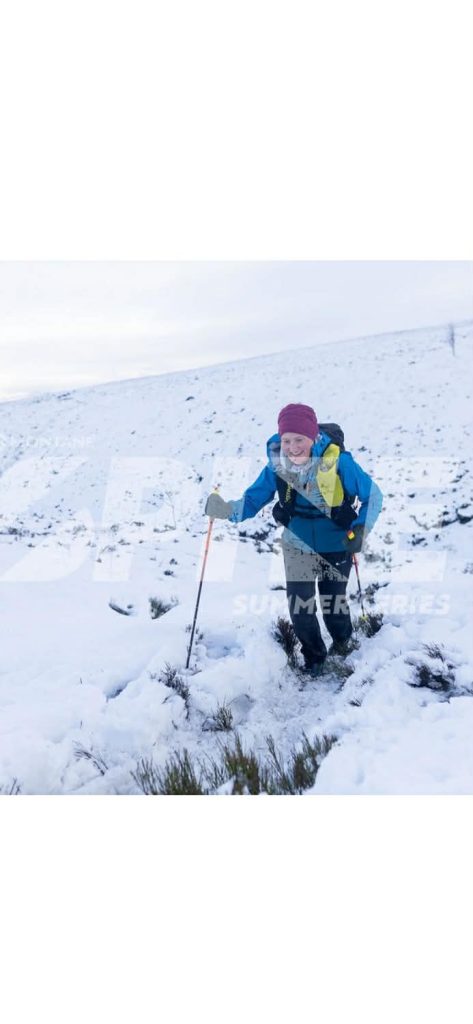
It just showed me that I had a capacity to keep moving at a decent pace in long races. I was moving for 52 hours with around 1 hour of sleep spilt between a 30 mins nap after I fainted at a checkpoint and 20 mins when I lay down in a bed at the next checkpoint. I was surprised how much I could still run in the latter part of the race.
That race came with some significant physical challenges — how did you manage the setbacks and keep moving forward?
I fainted at Greg’s Hut, and they kept me in the CP for longer than the allocated time. I started to panic I wouldn’t be allowed to continue so the drive to leave became stronger and stronger! I descended off the hill well even though the group I had been with had left and I was now by myself. I got into a rhythm and the food and rest kicked in. I then developed bad vertigo – I was so dizzy on that last morning I kept having to stop to lie down to help with the spinning. You just keep moving… I think when you prepare for a race like that you know you just keep moving – the lows will be over at some point! It also helped knowing that Orran and some other friends were out battling the elements too.
How do experiences like that influence your confidence going into future races?
It helps with scenario planning and what if’s – I have quite the array of meds and trinkets in my kit bag now to help with the bumps in the road! I have experienced a lot of setbacks in these types of races and challenges now – but there will be more!
Breakthrough Performances
The UTS 2024 race has been described as one of the toughest races in the UK — what made that event so extreme?
The route is brutal – there is so much elevation and descent – your legs are smashed within the first 4 hours – you summit Snowden at the start and at 80 miles – you cover more elevation than Everest within the first 100 miles – racking up over 10000m of elevation – however it is the up and down of the route which makes it tough. Your quads will not thank you!
Finishing as the third woman in such brutal conditions qualified you for the World Championships — how did that result change your perspective?
To be fair I was absolutely buzzing – UTMB the world champs was a dream bucket list race and that position qualified me for elite entry – couldn’t believe it! I had no idea that a podium in that race would do that – I was just made up with my flowers and trophy then found that out!
What lessons did you take from that race that you’ve carried into other competitions?
I suffered badly during that race with feet problems – basically I got really bad immersion foot, and the top part of both my feet were coming off – my toes were a mess – I had blisters everywhere – I could barely walk it felt like agony. I came in at 80 miles wanting to stop but Orran and the girl I was running with convinced me to head back out after we did some treatment on my feet. I had a terrible cough as well and couldn’t really speak very well. I left the CP “If I can’t make the next 20 minutes without too much pain I’m turning back”. Before I knew it I was back up Snowden and over the final 20 miles felt my strength come back as my voice disappeared!
It is just problem solving and knowing what is ok for you to do, knowing what you can push through.
The Ultimate Challenge
The Spine Race in 2025 is often referred to as Britain’s most brutal ultra — how did it compare to anything you’d experienced before?
Other than the challenger North 160-miler which I had done the year before which gave me a tiny little idea of what the Full Spine might be like – nothing really compared to the full Spine.
What were the toughest moments during that race, and how did you work through them?
Coming into the CP Hawes – I felt awful. I fainted in the CP, pretty standard for me though. Thankfully the medic that saw to me, had treated me in the Challenger North the year before when I had fainted again. He was like if you’re not planning on sleep here – your race is over. However, I was very much planning to sleep … so that was fine! I felt so much better after 1.5 hours of sleep – couldn’t believe it – was like a reset! I also started to vomit – also a standard. Orran helped me loads at that point – get out the checkpoint. I left the checkpoint sipping on a high carb gel and before I knew it, I was off again!
Finishing third in one of the strongest women’s fields the event has seen was a standout result — what does that achievement mean to you?
It is hard to describe – it’s just a cherry on top of a massive cake to be honest. The real achievement was everything that went into it and everyone I met through the Spine. Both races have changed my life.
Mindset & Resilience
Ultra running places huge demands on mental strength — how do you stay focused when things get really tough?
Music helps me to focus a lot when things are getting hard. Or counting to 8 – I have counted to eight many many times to help get me back on track during a hard race.
Thinking about my “why” and my support team help to pull me through, as well as drawing on previous experiences.
How do you balance pushing your limits with knowing when to be sensible in extreme conditions?
Great question. As this is something I have really got wrong in the past. I gave myself rhabdomyolysis in 2018 because I didn’t look after myself and didn’t stop when I should have. I was lucky my friend Andrew and support crew Lyndsay were around to help me when I needed it most.
In a way I am glad it happened. I’ll never put myself in a situation like that again. I’ve been through a lot in my ultras now to know what is relatively normal for me (vomiting and fainting are two things – not saying these are normal, but they are normal for me!). But the pain I was feeling when I had rhabdo… I’ll never push through that again.
What have ultra races taught you about yourself beyond running?
More than anything – ultra running has taught me about the power of community and fun. You can do it ….and then some. You just need to be in the situation to unlock it.
International Selection & Ambitions
You’ve been selected to represent Scotland for the first time — what does earning your first international vest mean to you?
I am so proud to be given the opportunity to wear the Scotland kit. I was initially first reserve and then about 4 hours later I got an email saying scrap that you are in the team. That initial disappointment has just made the selection even more immense.
How are you approaching the 53km international trail race in the Lake District?
Very similar to how I approach all my races – I will recce the route, I will plan my nutrition, and I will practice with my kit. Essentially in my terms, this is relatively short, so I will need to get some good speed work in my block as well as fast climbing legs. Good consistent training and gym work will be the big rocks to help me perform on the day.
What are your goals for the race itself?
Enjoy it! Run with heart… leave it all out there.
Community & Support
The support you received during the Spine Race was noticeable — how important is the Isle of Man community and wider running community to you?
Very – community is very special, and I think it would be hard to replicate what we have on the IOM which has such a rich and impressive sporting heritage. I will never forget sitting in the hotel after finishing the spine and reading all the comments people had left on my tracker. It was so emotional but I had literally cried the whole way along the Cheviots so there were no tears left. I still have the comments and having that helped get me to the end.
How much do relationships formed during training and races influence your motivation and enjoyment of the sport?
I think without my crew, my enjoyment would be much lesser. Having great training partners really helps with motivation and I am super lucky to be in a position where I have great girls and lads to push against in my sessions. This also helps with motivation. I said earlier, hill reps is my favourite session of the week – that’s because it’s a group session… Hill reps in the freezing cold, wind and rain just would not be the same without the crew. I have met many amazing people through ultras. I am in group chats with people who literally make me feel star struck – friends who are role models, and who inspire me every day. They are all a bit mad – so that helps ha!
What role do volunteers, organisers and support crews play in a successful ultra race?
Support crews are incredibly important to lean on if you can have them in the race. You can’t in the Spine, so it can be done without them – however that just means you appreciate it even more when they can support you. If it wasn’t for Orran and Sarah driving me forward during UTMB in August this year, I wouldn’t have finished. That low really took its time to leave!
Huge shoutout to any volunteer in any sport and even more so to race organisers. It really is a massive task to pull races and events off. Without them sport just wouldn’t be able to thrive.
Looking Ahead
Are there particular distances, terrains or races you’re excited to explore in the future?
So, I am in the ballot for Tor Des Geants in the Aosta Valley in Italy in September. This is not the longest I will have done at 330km, but the elevation is double what I have ever completed in a race before – taking in over 25000 meters of elevation over the 330km.
I have been in the ballots for a number of the big US races like Western States and Hardrock, which are classics on the scene – I would love to explore some of these in the future. Need to save my pennies for that though!
Ultimately, what do you hope to achieve — or discover — by continuing to push yourself in ultra-distance running?
For now, I am enjoying seeing what I can do whilst getting opportunities to explore some of the most incredible places in the world. Not only that, I get to meet some inspiring (and a little bit crazy) people who just get what it means to be into ultra running. That is more than enough.
Quick-Fire Questions:
Favourite race?
Spine Challenger North.
Toughest race you’ve ever completed?
Ultra Trail Snowdonia by UTMB 100-miler.
Most memorable moment on the fells?
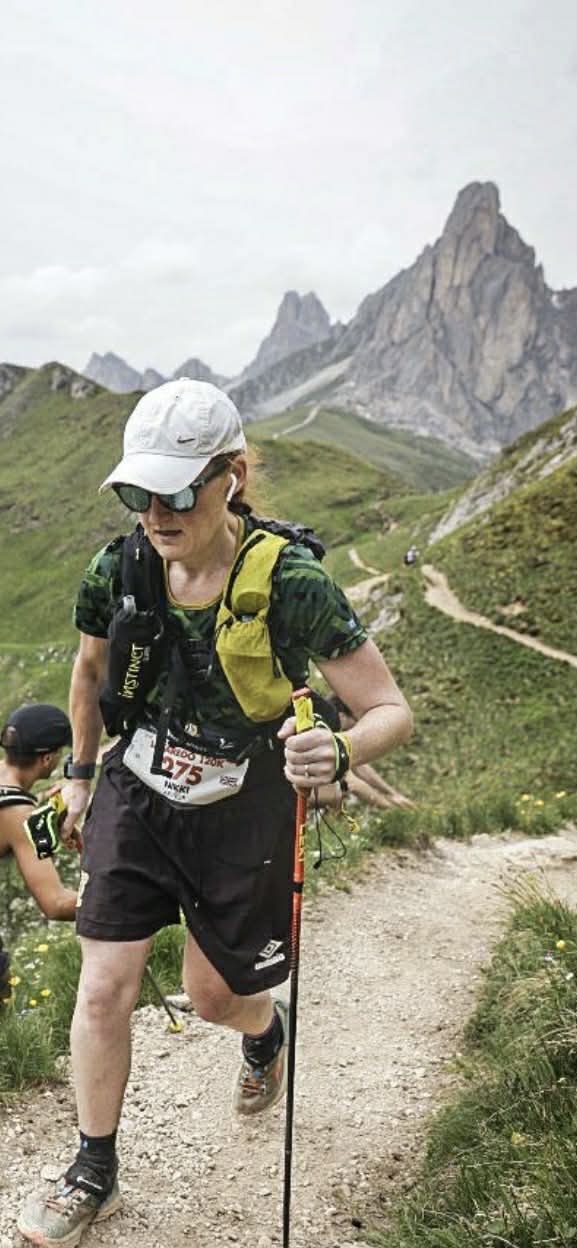
Not the fells, but the Laverado 120km race I did – sun rising in the mountains – it was the most incredible thing I have ever seen – I will never forget the moment I looked up and around. Unbelievable. Gives me goosebumps just thinking about it.
Favourite distance?
Tough one! Maybe 100-miler (except UTS – which is not a normal 100 miler haha!).
One race that changed everything for you?
The Manx Mountain Marathon.
Best place to train?
Italy or the IOM!
One word to describe ultra running?
Epic.