Dan Richmond – Q&A
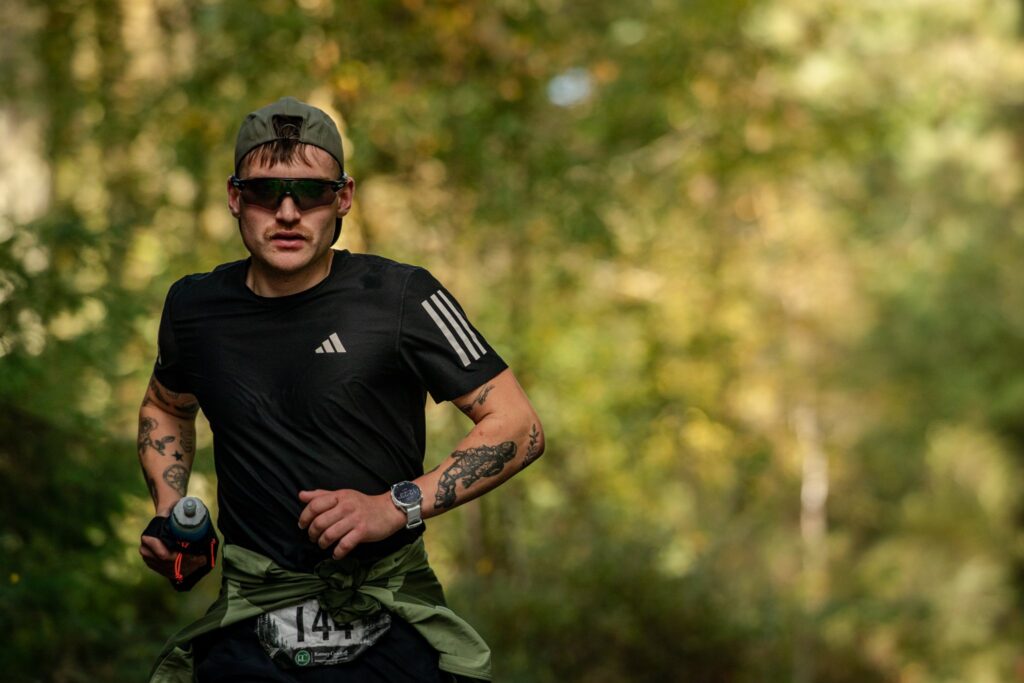
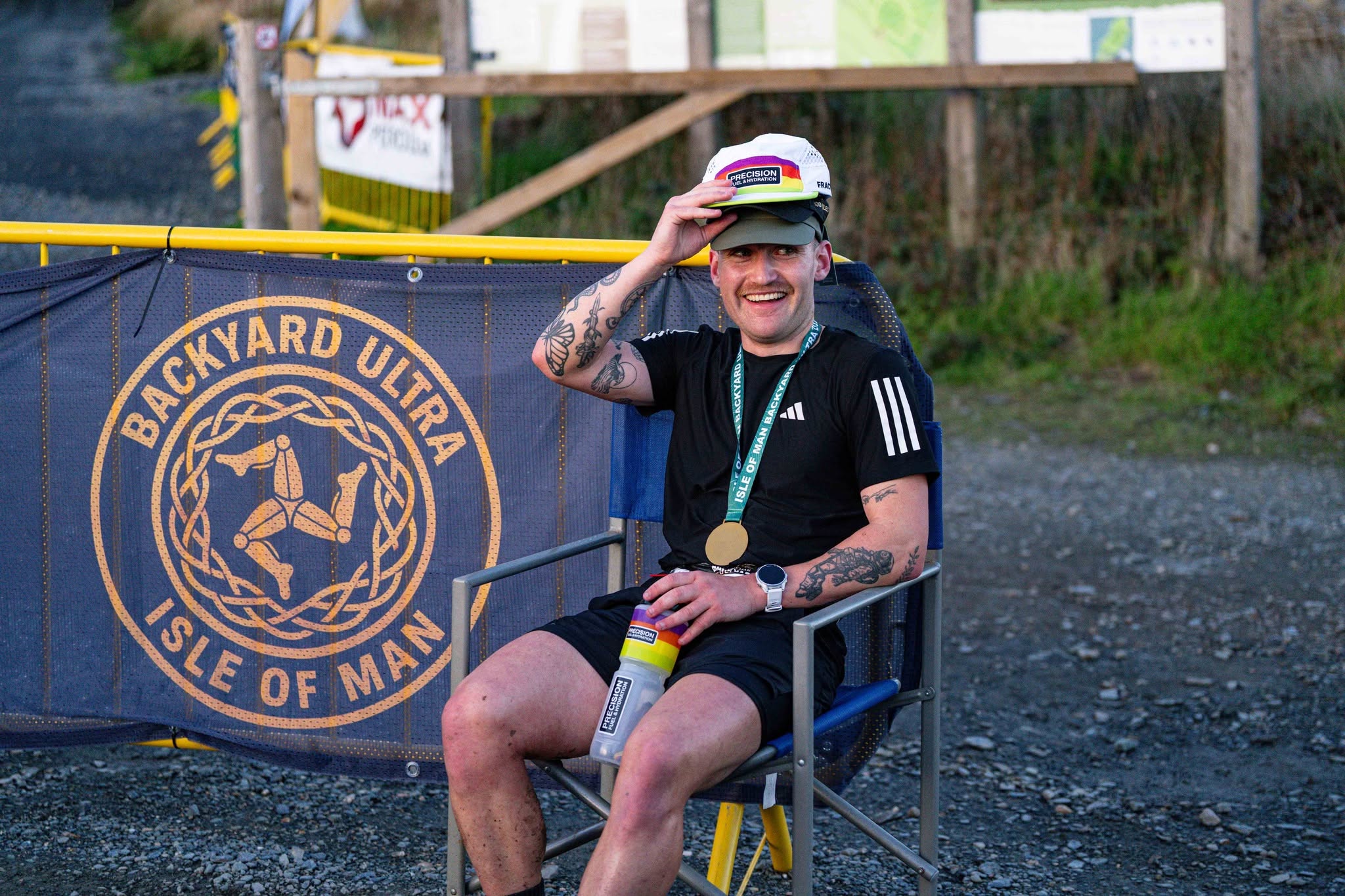
A conversation with one of the Isle of Man’s emerging distance runners, exploring his journey from road running to the trails, fells and ultra distances, following his recent victory at the Isle of Man Backyard Ultra.
Background & Beginnings
How did you first get into running, and what initially attracted you to the sport?
I first got into running in January 2024 off the back of a career-ending rugby injury whereby I was recommended not continuing with any contact sport. I’ve always been keen on health and fitness, so naturally I was attracted towards different ways of moving, and running felt like the best way of doing this.
You’re relatively new to running compared to some athletes. How has your journey developed since you first started?
I think it’s fair to say I’ve developed rather fast in the space of 2 years, but I think that’s because I threw myself in with both feet and tried to learn as much as I could to maximise my training week in, week out, without fatigue, injury, and boredom halting progress. Looking back to my first training week(s), I could barely tick off 20-25 miles without being done in and wondering if it gets better. Currently, 60–100-mile training weeks (with much more climbing) have become the baseline for me.
Who or what has had the biggest influence on your development as a runner so far?
I would say the two biggest influences I have had are Ollie Lockley, who first coached me when I realised I needed structured training, and the advice and coordination he provided me to set some mental targets straight out the door and allow me to achieve them at the first time of asking. The other is Orran Smith, and the whole ESTR community, who’ve developed my skills, fitness, and knowledge within the world of fell running, and ultra distances, and kept me levelheaded at quite a young age whilst dipping my toes into the world of ultra running.
Road Running & Development
You’ve achieved some impressive times over the half-marathon and marathon distances. Which performances stand out as your biggest achievements so far?
I’d say the three stand out performances I have had to date were running a 75 minute half marathon at the Flutter International Hospice Half Marathon in 2025, mainly as my watch had stopped working and I ran the whole thing completely blind and somehow managed a 5 minute PB going off feel. The next was the Manx Mountain Marathon in 2026, where I finished 3rd and managed to shave 44 minutes of my previous PB in the worst conditions I’ve ever ran in. The last would be the Backyard Ultra victory, technically this was 100 miles more than I’d ever run in my life, pretty cool thing to think about really!
How did you approach training for your first half-marathon and marathon, and what did you learn from those experiences?
My first half marathon was a 6-week turnaround from finishing the Parish Walk, and I just took each session as it came and had no idea on the day how it would go as this was my first road running race. I learned a lot about fueling on that one, particularly how caffeine gels are the devils work and should never be consumed. My first marathon followed this 4 weeks later, and my foot came well and truly off the pedal with this. I think every long, marathon specific session I did was on a violent hangover, and included multiple stops to see the previous evening’s takeaway re-appear. I don’t think I mentioned this to Ollie at the time (sorry Ollie), as I only had myself to blame for putting myself in that state, but the sessions got done, nonetheless.
Was there a particular race or moment when you realised you had the potential to achieve more than you initially expected?
I think the two circumstances I realised I may have potential were rocking up to the Manx Mountain Marathon in 2024 with next to no trail running experience, no nutrition knowledge, and no expectations, and finishing 7th overall and completing it in under 6 hours, which I later learnt is quite an achievement over the course. The next was that 75-minute half marathon, where I didn’t know I could move that fast, but realized I should maybe focus on running a little more seriously to keep the PBs coming over all the distances.
How has your training evolved as you’ve become more experienced and started targeting longer distances?
My training started with one interval session a week, and maybe running every other day, and this was enough to make me tired week in, week out. Looking back, I was running my ‘easy’ runs far too fast and rushing sessions when they didn’t need to be rushed. Nowadays, I’m training seven days a week, sometimes multiple times a day, including regular hill specific sessions, and two interval sessions per week. I’m also managing almost triple the volume I started at, but I put this down to learning how to run super easy and not using pace as a guideline during these easy runs.
What have been the biggest challenges you’ve faced in progressing as a runner, and how have you overcome them?
My biggest challenge has been losing my ego, and accepting that running can be slow and boring, but that’s what’s needed to build a quality aerobic base, fit more mileage in, and allow your hard sessions to be as hard as is needed. I’m also incredibly lazy, so the idea of running as slow and easy as possible has always sounded great to me.
Moving to the Trails & Ultra Distances
You’ve recently shifted your focus towards trail running, fell running and ultra distances. What attracted you to this side of the sport?
I was drawn into fell running as it’s always stimulating, whether it’s your surroundings or simply trying not to break your ankles as you descend the side of a mountain. There’s also much more to the sport, such as map-reading, navigation, and choosing good lines over the countryside. I wanted to learn more about it.
What do you enjoy most about running on the trails and fells compared to racing on the road for example?
I get bored very easily, and unconsciously get stressed whilst running around busy areas, so morning road runs during rush hour would cause me to be unsettled and my heart rate would be all over the place. On the fells, this almost never happens, and I’m quite content with disappearing for hours on end and not coming across a single other person. It can also super technical, so you can’t just switch off and lose track of certain metrics like you can on the road.
How have you adapted your training to prepare for the different demands of off-road and ultra-distance racing?
My training doesn’t look much more different, the main change was the amount of time spent on feet each week, due to the terrain and amount of elevation you clock on each run. The easy running is much easier off-road, mainly because you’re walking up hills and chilling on the descents, but the principles are still the same and I’m still using my zones to dictate each session.
What do you think are the biggest differences between preparing for a road marathon and tackling an ultra-distance events?
Preparing for a road marathon requires each week to run like clockwork, and failure to hit key sessions or required mileage will likely impact how you perform on the day as you haven’t built the resilience to meet the demands of the marathon distance. With ultra-distance events, there are limited key sessions, a lot of work I’ve done has been around accumulative time on feet. As long as you’re moving, you’re winning with longer events. However, still missing big training runs will still catch you out come race day(s).
Are there particular skills you’ve had to develop, such as navigation, pacing, nutrition or managing challenging terrain?
I’ve had to learn how to navigate using map and compass pretty fast, as the rules of fell races require you to go from checkpoint to checkpoint without GPS navigation, and unless dictated by flagged routes, you can get there by any route necessary. Pacing isn’t as essential in fell running, but having a good understanding of the topography of the race route does help as you know when to push hard, or when to conserve energy for a late climb. I have found fueling whilst fell running much easier, as it tends to be at a lower intensity than 5km-marathon distances, plus with the undulating nature of races you can fuel during flat or descending sections when you aren’t pushing into the red.
Do you have a particular trail or ultra race that you would love to take on in the future?
I would like to take on the UTMB and the Dragons Back in Wales from an ultra-marathon perspective, but before this taking on some of the classic fell races across the lake district would be a nice stepping-stone.
Isle of Man Backyard Ultra
You recently won the Isle of Man Backyard Ultra – Congratulations! For anyone unfamiliar with the format, how would you describe a Backyard Ultra and what makes it such a unique challenge?
The Backyard format requires you to run a 4.167 mile loop on the hour, every hour, until there is one person left. So, if you complete the loop in 40 minutes, you have 20 minutes to chill out, eat, sleep, go to the toilet, whatever you want to do. You just need to be back in the start pen for the start of the next hour. It is a unique challenge as it requires a level of start/stop, strictness around pacing, and sleep deprivation once you surpass certain time frames. There is no finish, so you just need to keep moving.
Going into the event, did you have a particular goal in mind?
I had no goal for the event, it was actually a ‘C’ event and a good way to build some easy mileage ahead of a big winter building block. The plan was I would stop when it became difficult, as the risk of injury wasn’t worth it at this moment in time. Luckily, it didn’t become difficult during those 31 hours, and I felt like my morale remained high throughout the entire event. The toughest moment(s) were the small periods of nausea I experienced, which I combated by taking no fuel onboard and sipping water until it disappeared, usually took 10-15 minutes and I was back to normal.
Backyard Ultras require a very different approach to a conventional race. How did you manage your pacing, recovery and nutrition between laps?
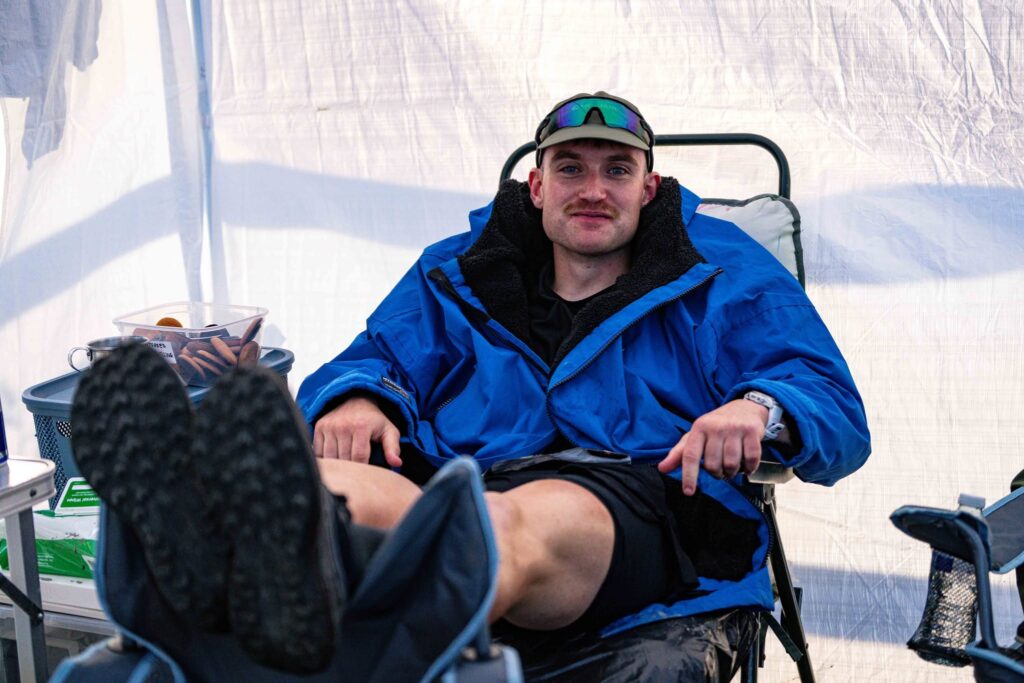
My pacing was metronomic, unintentionally, but I like to play the numbers game each lap. I set myself markers around the loop, and I had to get to them by specific times, but it didn’t matter whether this was through walking, running, or sprinting. Besides four quicker laps to get some shut eye, one quick lap to get changed in the rain, one slow lap due to a toilet break mid-lap, and two slightly quicker laps because I was chatting, the other 23 laps were all within 60 seconds of each other due to this little numbers game I played each lap. I tried to keep my nutrition consistent, and making my support team just put food in my hand and I couldn’t argue with what it is – worked a treat. All I had to do was sit down, put my feet up, and wonder what the hell I was doing.
At what point did you start to believe that winning was a realistic possibility?
You don’t really know that winning is a possibility, until you’re stood alone in the start pen, or the other people fail to complete the loop within the hour. Someone could be hobbling around, but just keep on ticking laps off, it doesn’t matter how fast or slow. All I knew was that I felt no worse than I did on lap one, and that was all that mattered to me.
What did it mean to come away with the victory, and what did the experience teach you about your physical and mental limits?
Winning was pretty insane, I didn’t expect the field to thin out quite as quickly as it did, but I just stuck to my plan and ticked each lap off as it came. I had actually started to plan for a second night of running, and when I’d start to sleep again, but that wasn’t necessary in the end. The experience told me I have a lot left in the tank, and it’s an exciting thought as to what is still left to come. Particularly when seeing the world record being broken at the world champs, I’d have to run my 31-yard winning performance another 3 times just to equal it, mental. The win has definitely made me realise there’s potential in the ultra-running scene to really push my limits, however, I’m still only 24 and my body won’t be primed for these distances for another 5-6 years, so I’m in no rush to fully commit to multiple events a year at this point in time.
Training & Approach
How do you currently structure your training, and are there particular sessions or approaches that have helped you improve the most?
Currently, I train seven days a week, easy running every day, with a hill specific session on a Tuesday, threshold intervals on a Thursday, long hill reps or VO2 intervals on a Saturday, and a long fell run on a Sunday. Typically, my mileage falls between 60-100 miles per week, and I aim to get 3,000-5,000m of elevation each week. I would say the hill specific sessions have been a huge boost to my climbing and descending abilities and managing to stabilise my breathing and heart rate during both.
How do you balance running volume, intensity and recovery while building towards longer-distance events?
The only way I can balance volume, intensity, and recovery is by listening to my body. If it feels worn out, I’ll take a rest day. If it feels good, I’ll stay on track. As long as key sessions are being ticked off, I’m happy. I see it as simple as that.
What role do strength training, cross-training and time on the trails play in your preparation?
I do two to three S&C sessions per week, but these are largely for injury prevention, trunk stability, and single leg stability and coordination skills. It’s vital for longevity in the sport and allows me to fully commit in races and perform at my best. I spend 90% of my time on the trails, building confidence in my body and allowing me to adapt to the uneven surface I’m training and racing over.
How do you approach nutrition and hydration during long training runs and ultra races?
On long training runs, and ultra-races, I eat the same breakfast (500ml orange juice and an entire fruit loaf, IYKYK) then aim to consume at least 90g/hr of carbohydrates during the session or race. I’ve found this benefits me more post-session or race as I am not rushing to refuel as heavily as I’ve stayed relatively close to my energy maintenance level without heavily depleting glycogen stores. I also aim for 500-750ml/hr of water depending on the temperature, or in a crude way, 1-2 toilet stops per hour is a good gauge of hydration for me.
What do you find most challenging about training for ultra distances, particularly when it comes to balancing running with everyday life?
The most challenging part of running ultra distances is the consistency. Missing one session means you’re making your life more difficult later in the week with fitting volume in. This does however keep me accountable, and unless my body is fighting back, I won’t miss out on these runs. You’ve seriously got to love the sport to fully commit to it.
Mindset & Resilience
Ultra running places huge demands on both the body and mind. How do you deal with the moments when things become difficult?
There is always going to be a point where ultra running gets tough, but there’s also a point where ultra running feels great. This is just a vicious cycle repeatedly during a race or session, you’ve just got to accept what phase you’re in and keep pushing through.
Have you learned anything about yourself through running that has surprised you?
I would say I have learned how grateful I am to be able to do what I do day in, day out, and keep raising my own ceiling and pushing for new limits. I always knew I wanted to work hard, and now I am holding myself accountable to achieve these goals I set myself. My motivation is always high, but that’s because I love being able to put my trainers on and go out and move. It’s such a privilege to do tough things!
What advice would you give to someone who is interested in trying trail or ultra running but is unsure whether they are ready?
For anyone wanting to try fell running, or ultra running, make sure you’re ready, physically and mentally. Anyone is capable of doing it, but you need to embrace the challenge, enjoy the process, and listen to what your body is telling you. There’s no joy in being a superhero in training, when you fail to make the start line of a race.
The Isle of Man Running Community
How important has the Isle of Man running community been in helping you develop and discover new challenges?
It’s a very welcoming community, and thriving at the moment. I met people who I’d known about in the running news for a while, and suddenly you find yourself training with them, and racing against them regularly. This also meant I found out about more and more races/challenges that I could add into the racing schedule and tick off overtime.
Have other local runners, coaches or events influenced your decision to move towards trail and ultra running?
The main people involved in my transition towards fell running have been Nikki and Orran, who gave me the opportunity to join some of their coached sessions on Peel Hill, and support any ideas I had around training and racing on island, and across the UK.
What do you think makes the Isle of Man such a good place to train for fell and ultra-distance events?
The Island is an ideal place for fell and trail running purely because you have nature on your doorstep, meaning the barriers to getting out there are very slim. It’s also a pretty cool feeling to head out for a few hours in the hills, and you’ve accidentally navigated a good chunk of the island and joined multiple villages/valleys in the process.
Looking Ahead
What are your main goals for the next 12 months, both on the trails and over ultra distances?
There are a few goals looking ahead. I’m looking at a sub-5-hour Manx Mountain Marathon, a continuous Raad Ny Foillan attempt in spring, working towards the top 20/30 throughout the English Fell Running Championships, being competitive in the local fell league, and hopefully retaining the Backyard Ultra title in 2027. There’s also potential for a Bob Graham round attempt in Keswick over the summer, but we will see how much time I have free for that one.
How far would you ultimately like to push yourself in ultra running?
I’d like to really find my physical and mental limit over the next few years and ultimately push through this and find exactly where enough is enough. But I’m not in a rush to do this, being only 24 still. I have a fair few years until my endurance capacity peaks, so it’s an exciting concept going forward.
I’d really like to be competitive across multiple disciplines and distances, not just entering events and races to take part. But with the quality of fields toeing start lines nowadays, this will be a huge ask and a challenge I’m willing to step up to.
Advice & Reflection
Looking back at your journey so far, what are you most proud of?
I’m proud of my work ethic, and understanding results don’t just come from thinking about them. I love setting mental goals, and achieving them even when I shouldn’t really be able to.
If you could give one piece of advice to yourself when you first started running, what would it be?
Looking back, I would tell the Dan who just started to slow it down and enjoy the process without needing to do everything at 100mph. That includes those ‘easy’ runs that put me in the bin every single time.
What would you say to someone who has recently taken up running and is wondering how far they could take it?
For someone new to running, enjoy and appreciate being able to put your shoes on and go out and run. Turn up every day, enjoy it, be curious, and ask lots of questions to those that have done it already. Set some big goals and don’t settle for anything less than them!
Quick-Fire Questions
Favourite distance to race?
Half Marathon.
Favourite type of terrain?
Fell.
Toughest race you’ve ever completed?
Oslo Marathon – awful course!
Most memorable running moment?
Backyard Ultra Isle of Man – Yard 31.
Favourite training session?
Literally anything but 25x400m!
Go-to pre-race meal?
One entire fruit loaf + 500ml of organge juice.
Essential piece of kit for an ultra?
Waterproofs.
One thing you always look forward to after a long run?
Choccy milk (IYKYK)!
Dream ultra race?
UTMB.
One word to describe the Backyard Ultra experience?
Epic.
Favourite place to run on the Isle of Man?
Laxey Valley.
What motivates you when the going gets tough?
Food in all honestly.
One piece of advice for someone starting out in running?
Have fun. It’s pretty asesome to get out and running!